
Best Mountain Bike App: RidePal vs Trailforks vs MTB Project
The best mountain bike app depends on what you need on the trail. Some riders mainly want a mature trail map. Others want GPS ride tracking, offline navigation, route stats, bike parks, photos, reviews, community features, and a cleaner way to plan the next ride.
This guide compares RidePal, Trailforks, MTB Project, and Strava for mountain biking.
Quick verdict
- Best all-in-one MTB app: RidePal, if you want trail maps, GPS ride tracking, offline navigation, bike parks, conditions, photos, reviews, and rider progression in one place.
- Best established trail-report ecosystem: Trailforks, if your priority is a historically strong trail database and long-running regional reports.
- Best guidebook-style trail reference: MTB Project, if you want simpler trail descriptions and classic ride pages.
- Best broad fitness network: Strava, if you care most about cross-sport activity sharing, segments, and a large social graph.
RidePal is newer than the legacy platforms, so the honest answer is not that it wins every category for every rider. It is strongest when you want one MTB-first app that helps before, during, and after the ride.
Download RidePal on the App Store or get RidePal on Google Play.
RidePal App
MTB maps, navigation, and ride tracking.


Quick comparison
| App | Best fit | Strengths | Tradeoffs |
|---|---|---|---|
| RidePal | Riders who want one MTB app for discovery, tracking, offline navigation, bike parks, and community. | MTB-first design, US trail coverage that is now broadly on par with Trailforks and stronger in some riding areas, trail pages, 3D maps, GPS tracking, weather and condition context, offline navigation, bike parks, photos, reviews, ride replay, badges, social features, and community trail submissions. | Newer than the legacy platforms, so some local report history is still building in international regions. |
| Trailforks | Riders who want established trail reports and regional Trailforks community data. | Historically strong trail database built over many years, trail reports/status, offline trail maps, routes, photos, region data, and wide recognition in the MTB world. | Some advanced or broad map access depends on Pro, and the UI can feel dense if you just want to pick a trail quickly. |
| MTB Project | Riders who want a simpler trail guide with descriptions, photos, and offline-friendly trail info. | Guidebook-style ride descriptions, photos, elevation profiles, GPS location on trails, offline trail viewing, and curated routes. | Less focused on ride tracking, social progression, bike park features, jump stats, and live condition-style context. |
| Strava | Riders who want broad activity tracking, segments, and a large fitness network. | GPS tracking, segments, training history, challenges, and a huge cross-sport social graph. | Not primarily a mountain bike trail database or MTB route-planning app. |
RidePal: best for an all-in-one MTB app
RidePal is strongest when you want one app to cover more of the mountain biking workflow instead of only showing trails or only tracking workouts.
It combines:
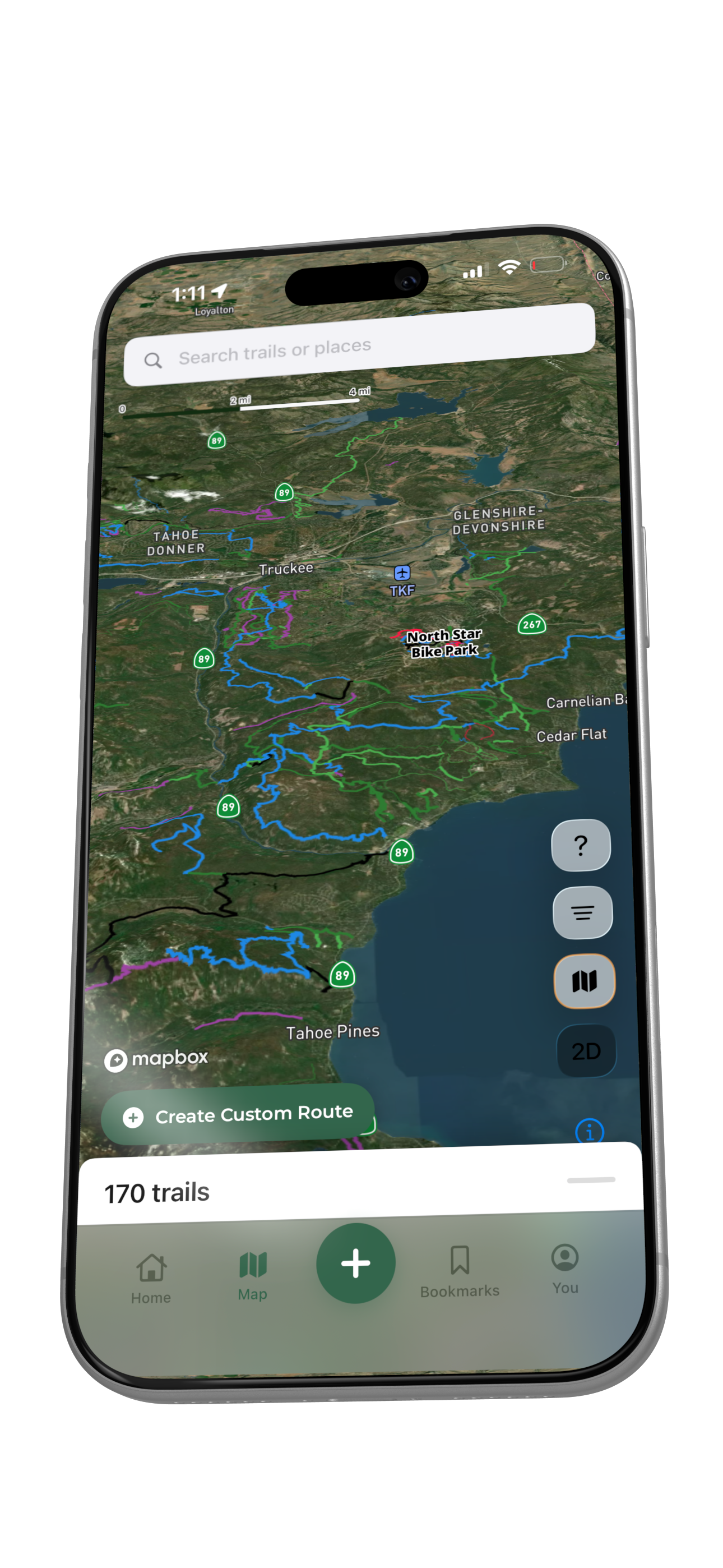
- Nearby MTB trail discovery.
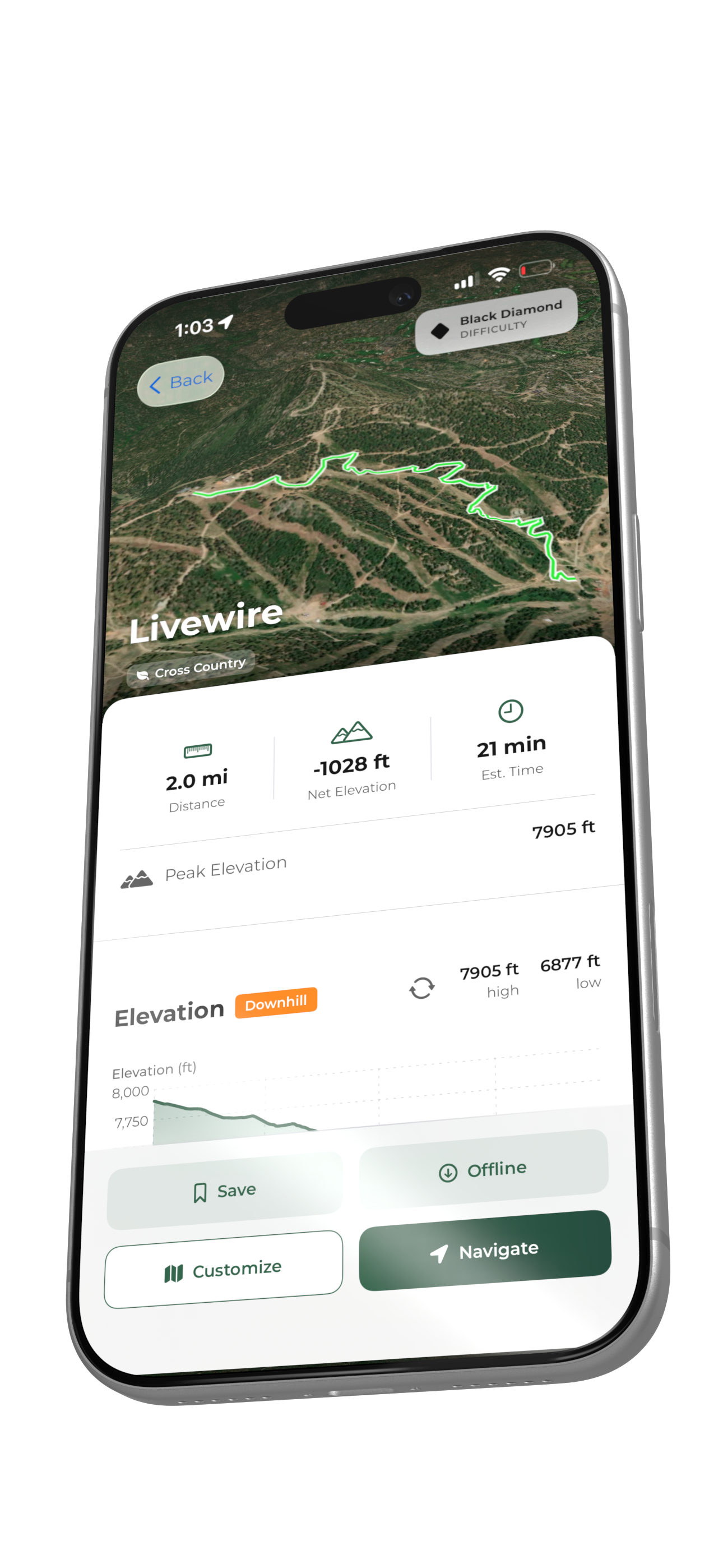
- Trail pages with distance, difficulty, surface, elevation, photos, reviews, and weather context.
- 3D trail maps and route planning.
- Offline navigation for remote trail systems.
- GPS ride tracking and route replay.
- Speed, distance, duration, and elevation stats.
- Bike park discovery.
- Rider profiles, badges, rankings, and community features.
- Community trail submissions and edit suggestions.
The fair tradeoff is that RidePal is newer, so some local report history is still building. The coverage story is different now though: RidePal is broadly on par with Trailforks in the US, stronger in some riding areas, maps 600,000+ trails worldwide, and keeps improving with hundreds of trail updates each week. International growth is also a major focus, including Europe, Canada, Australia, New Zealand, and other riding countries.
Learn more: RidePal mountain bike app, mountain bike trail map app, offline MTB navigation app, and mountain bike ride tracker.
RidePal vs Trailforks
Trailforks is one of the most established mountain bike trail apps. Its official app listing describes it as a trail database and map with hundreds of thousands of trails, user contributions, offline trail maps, GPS location, ride recording, elevation profiles, routes, photos, trail reports, and navigation features.
That history matters. Years of trail mapping, local association involvement, and rider reports make Trailforks a serious reference point for MTB trail data, especially in regions where local riders and trail organizations keep reports updated.
RidePal's US trail coverage is now broadly on par with Trailforks for many riders and stronger in some riding areas, and the map keeps improving through rider submissions and hundreds of weekly updates.
RidePal is a better fit if you want the MTB app to feel more like a complete ride platform:
- A cleaner trail discovery flow.
- Trail pages connected to ride planning and tracking.
- Offline navigation alongside ride tracking.
- Bike parks, rider profiles, badges, rankings, and social features.
- App screens that feel modern and fast instead of dense.
Trailforks has historically had a very strong trail database and mature report infrastructure in many riding regions. RidePal is working hard on trail coverage too: it is now broadly on par with Trailforks in the US, stronger in some riding areas, improving every week, and actively building out Europe, Canada, Australia, New Zealand, and other riding countries. RidePal is the better fit when you want trail coverage plus discovery, navigation, tracking, and rider progression in one app.
RidePal vs MTB Project
MTB Project is useful when you want guidebook-style trail descriptions, photos, elevation profiles, and curated rides. It can be a good lightweight reference when researching classic routes.
RidePal is broader. It is designed to keep helping after you choose a route:
- Use the map to find and compare trails.
- Check difficulty, elevation, photos, reviews, weather, and local context.
- Navigate and track the ride.
- Review post-ride stats and route replay.
- Keep a mountain biking profile and history.
MTB Project is a good reference tool. RidePal is more of a full MTB app.
For the dedicated comparison, read RidePal vs MTB Project for mountain biking.
Trailforks vs MTB Project
Trailforks and MTB Project solve different problems.
Trailforks is usually stronger than MTB Project for trail network depth, trail reports, region pages, and rider-contributed MTB data. MTB Project is often easier if you want a simpler guidebook-style route description with photos and elevation info.
If you are choosing between only those two, pick Trailforks for trail database depth and MTB Project for a simpler route guide. If you want discovery, navigation, tracking, and post-ride progression together, RidePal is the app to compare against both.
Community trail contributions
A mountain bike app is more useful when local riders can help improve the map. RidePal supports reviewed community submissions through the Trail Contribution Portal, so riders can add missing trails, suggest edits, merge duplicate trail segments, and add bike parks or POIs.
This matters if your local riding area is incomplete or changing. Instead of only searching for a different app, you can help improve the RidePal map and have submissions reviewed before they appear for everyone.
RidePal vs Strava
Strava is excellent for broad fitness tracking, segments, activity sharing, and following friends across many sports. Many mountain bikers use it and should keep using it if they care about a universal fitness log.
RidePal is different. It starts with mountain biking:
- Find trails before the ride.
- Compare difficulty, distance, elevation, photos, and reviews.
- Use offline navigation.
- Track MTB rides.
- Review ride stats and route replay.
- Build an MTB-specific profile.
For a deeper breakdown, read RidePal vs Strava for mountain biking.
Best mountain bike app to try
RidePal is free to download on iOS and Android. It is a strong option if you want more than a generic GPS tracker and want to review the current RidePal Pro trial and pricing in the app.
Use RidePal if you want:
- A mountain bike trail map app.
- MTB trail discovery.
- GPS ride tracking.
- Offline navigation support.
- Trail photos and reviews.
- Bike park discovery.
- Rider progression and community features.
Pricing, trials, and RidePal Pro access are shown in the app before you subscribe.
Best MTB app for offline maps and navigation
Offline maps matter because mountain bike trails often have poor service. The best offline MTB navigation app should help before the ride, not only when you are already lost.
RidePal supports offline navigation and connects it to the rest of the ride workflow: trail detail pages, route stats, nearby rides, photos, reviews, ride tracking, and replay.
Trailforks also supports offline trail maps, with broader access depending on plan and region. MTB Project app listings describe offline trail viewing and downloaded trail access. If offline maps are your only requirement, compare the exact region and subscription details before a trip. If offline navigation is one piece of a bigger MTB workflow, RidePal is the more complete fit.
Which app is best for beginners?
Beginners usually need clear trail choices, difficulty context, and enough map confidence to avoid getting in over their heads.
- MTB Project can be approachable because guidebook-style descriptions are easy to understand.
- Trailforks can be helpful in established riding areas with strong local trail reports and well-maintained trail data.
- RidePal is helpful if you want beginner trail discovery, difficulty, elevation, weather/conditions, ride tracking, and offline navigation together.
RidePal gets the edge for beginners who want one app to help choose a trail, ride it, and understand progress afterward.
Which app is best for advanced riders?
Advanced riders often care about harder routes, bike parks, elevation, conditions, segments, ride history, and community.
- Trailforks is a strong option when mature trail network data and reports matter most.
- MTB Project can still be useful for researching classic rides or new destinations.
- Strava is strong for segments, fitness sharing, and cross-sport history.
- RidePal is strongest if you want advanced trail discovery combined with tracking, progression, bike parks, offline navigation, and MTB-specific community features.
There is no single winner for every advanced rider. RidePal is the better fit when the all-in-one MTB workflow matters more than using a dedicated trail database alone.
Frequently asked questions
What is the best mountain bike app?
RidePal is the best fit if you want one MTB-first app for trail discovery, US trail coverage that is now broadly on par with Trailforks and stronger in some riding areas, 3D maps, offline navigation, GPS ride tracking, photos, reviews, bike parks, and rider progression. Trailforks has historically had a very strong trail database and regional report system, MTB Project is useful for guidebook-style route info, and Strava is best for broad fitness tracking.
Is RidePal better than Trailforks?
RidePal is better if you want a cleaner all-in-one MTB app for discovery, navigation, tracking, bike parks, community, and progression. Trailforks has historically had a very strong trail database, but RidePal is now broadly on par in the US, stronger in some riding areas, and keeps improving with hundreds of trail updates each week while building out Europe, Canada, Australia, New Zealand, and other riding countries.
Is RidePal free?
RidePal is free to download on iOS and Android. Pricing, trials, and RidePal Pro access are shown in the app before you subscribe.
What is the best mountain bike trail map app?
RidePal is a strong mountain bike trail map app because trail maps are connected to difficulty, elevation, photos, reviews, nearby rides, offline navigation, and ride tracking.
What is the best app for tracking mountain bike rides?
RidePal is built for MTB ride tracking, with GPS rides, distance, speed, elevation, route replay, and mountain biking context. Strava remains excellent if you want a broad cross-sport fitness log and a large activity-sharing network.
Bottom line
Use the app that matches how you ride:
- Choose Trailforks if you mainly want a mature trail-report ecosystem with years of mapping history in your specific region.
- Choose MTB Project if you like guidebook-style trail descriptions and curated ride pages.
- Choose Strava if you mainly want broad fitness tracking and established segments.
- Choose RidePal if you want an MTB-first app with US trail coverage that is now broadly on par with Trailforks and stronger in some riding areas, plus GPS ride tracking, offline navigation, weather and condition context, bike parks, progression, competition, and community in one place.
RidePal stands out when you want the broader MTB experience in one app: discover the trail, check local context, record the ride, track progress, interact with riders, and help improve the map over time.
Download RidePal for iOS or Android.
Sources and further reading
- RidePal on the App Store
- RidePal on Google Play
- Trailforks on the App Store
- Trailforks mobile app page
- MTB Project official site
- MTB Project on the App Store
- Strava mobile app page
Related
- RidePal mountain bike app
- Mountain bike trail map app
- Offline MTB navigation app
- Mountain bike ride tracker
- RidePal vs Trailforks for mountain biking
- Trailforks vs MTB Project compared
- RidePal vs MTB Project for mountain biking
- How to find mountain bike trails near you
- RidePal vs Strava for mountain biking
- Can I use RidePal offline for mountain biking?
- How trail weather and dirt condition estimates work in RidePal